

Memory Lane
Our Memory Lane Dementia Day Service is provided in partnership with Age UK Lincolnshire.
The service provides a safe and enjoyable experience for individuals while offering carers the opportunity to rest or otherwise enjoy their time.
We want our loved ones to remain independent for as long as possible but a diagnosis of dementia can make caring harder than it used to be.
What we offer
- A secure and peaceful environment
- Employees trained in dementia care
- Time, patience and understanding
- The opportunity to socialise with others within a small group – up to a maximum of 15 clients
- Activities designed to engage and stimulate
- A nutritious two course lunch (additional cost applies)
- Refreshments throughout the day
- Signposting to other services for carers
- One free trial session to help us and you assess if this is the right environment.
-
Late Day Stress (Sundowning) in Dementia
The clocks change this weekend. 25th October 2026
As autumn settles in and the evenings get darker, the changing seasons can bring extra challenges for people living with dementia. With the clocks going back this Sunday, 25th October, I wanted to share some advice from Dementia uk about sundowning and how you can help someone who may be affected.
What is sundowning?
Sundowning is a common symptom of dementia. It causes feelings of intense confusion, anxiety and agitation, typically in the late afternoon and evening, around dusk. It is thought to affect about 20% of people with dementia, often due to tiredness, unmet needs (like hunger or pain), a lack of daytime activity or natural light or environmental changes. Sundowning can often be managed using strategies that include identifying triggers and patterns for the person’s anxiety, using calming techniques and distraction, and maintaining a consistent daily routine.
Why does sundowning happen?
There are many possible reasons why sundowning may occur. These include:
- tiredness
- the person having unmet needs that they cannot express, eg hunger or thirst
- being in physical pain
- a lack of activity or exposure to natural light during the day
- overstimulation during the day, such as being in a noisy, busy environment
- hormonal changes towards the end of the day
- medication side effects
- changes in the person’s body clock that occur in some types of dementia, such as Lewy body dementia
- environmental changes like streetlights coming on or people settling in for the evening, which can trigger a sense of being in the wrong place
- the person’s family members being tired and less able to meet their needs
- fewer care staff being on shift in a care home to support the person
What are the signs and symptoms of sundowning?
Confusion as a symptom of sundowning
Sundowning often makes a person with dementia feel very strongly that they are in the wrong place. They might say they need to go home, even if they are at home, or think they need to pick their children up from school, even if they are now adults. They might believe they have to go to work, even if they are retired.
The person might become confused about who people are or what is going on around them. They might ask the same questions repeatedly, for example, “When will you take me home?”
Anxiety as a symptom of sundowning
The sense of intense confusion that comes with sundowning typically makes the person with dementia feel very unsettled and anxious.
Agitation as a symptom of sundowning
A person who is sundowning might show agitated behaviour such as restlessness, fidgeting (for example plucking at their clothes or skin), irritability, shouting or arguing. They might follow a family member, pace or walk around – this might seem aimless, but they may be trying to fulfil a need like finding someone they remember or getting something to eat. They might put their shoes and coat on and try to leave their home.
How do symptoms of sundowning differ from general symptoms of dementia?
Sundowning typically causes changes in behaviour such as agitation, restlessness and confusion. While these are common symptoms of dementia and can occur at any time, in sundowning, they become much more pronounced in the late afternoon and evening. In particular, the person may seem not to understand where they are in time and place, which can cause intense anxiety.
When does sundowning happen?
Sundowning typically happens in the late afternoon and evening, around dusk. It may be brief or last several hours. While symptoms often ease by the time the person with dementia goes to bed, in some people, they may continue into the night.
How common is sundowning?
Sundowning is thought to affect around 20% of people with dementia, and around 80% of people with dementia in residential settings like care homes, particularly if they have recently moved into the home or changed rooms, or if the environment is busy in the evenings. It is most common in the middle to late stages of dementia.
Does everyone with dementia experience sundowning?
Not everyone with dementia will experience sundowning. It depends on the person, their type of dementia and its stage. A person who is affected by sundowning will not necessarily experience it every night.
Tips for managing sundowning
- Try to work out whether there is a pattern to the person’s sundowning. It may be helpful to keep a brief record of what happens beforehand to establish possible triggers
- Try to distract the person: go into a different room, make them a drink or snack, play some music or watch a film
- Displaying a dementia clock that shows the day, date, time and time of day (eg morning, afternoon, evening, night) may be helpful
- Hold the person’s hand or sit close to them and stroke their arm
- If there are children in the person’s home, explain the need for keeping evenings quiet and calm – for example, they could wear headphones for listening to music or playing computer games to minimise noise
Communicating with a person who is experiencing sundowning
- Talk in a slow, soothing way
- Speak in short sentences and give simple instructions to avoid confusing the person
- Ask the person what the matter is. Listen carefully to their response and if possible, see if you can resolve the reason for their distress
- Gently remind them what day and time it is
- If the person struggles to communicate, look for clues in their behaviour – for example, holding or rubbing a part of their body could suggest they are in pain
- Avoid contradicting or arguing with the person as this may increase their distress
Exercise and physical activity
Regular exercise and physical activity can help improve sleep at night and in turn reduce daytime fatigue and evening restlessness, which often make sundowning worsen.
- Follow a daytime routine that contains activities that the person enjoys, like gardening or going for a walk. Staying active during the day, whether through exercise, hobbies or spending time with others, can help to regulate the body clock
- Spending time outside in natural light can help to regulate the body clock. If that is not possible, you could position the person’s favourite chair by a window so they spend time in daylight
- If the person is less mobile, support them to move around in ways that suit their capabilities, such as a gentle walk around the garden or seated exercise
Medication to manage sundowning in people with dementia
In most cases, medication is not prescribed for sundowning itself, as it is best managed using the advice on this page. However, in some cases, a person with dementia might be prescribed medication for specific symptoms such as anxiety, agitation or restlessness, which might also help with sundowning.
Reference (www.Dementiauk.org)
Dementia UK can support you if you are concerned about sundowning or any other aspect of dementia.
Admiral Nurse Dementia Helpline: call free on 0800 888 6678 (Monday-Friday 9am-9pm, Saturday and Sunday 9am-5pm, every day except 25th December)
-
Show me the way to go home
Show me the way to go home!
People living with dementia may be sitting in their own home or a space they’ve been used to for a long time and yet still saying, ‘I want to go home.’
Why?
Dementia damages memory and orientation. Places they have known well may feel unfamiliar and unsafe. They may believe they’re living in an earlier time in their life and so their current surroundings don’t look or familiar. This can cause great confusion and anxiety.
Rather than just responding with, ‘You are home!’. Believe that they feel lost (in space and time) and they’re looking for a place of comfort, belonging and most of all, safety.
Challenging the feeling can make the person feel more confused. Instead, try to validate their feelings - I can see you’re not feeling comfortable or It sounds like you’re not feeling comfortable or safe. Then distract - Tell me about your home. What’s your favourite part of your home?
Try to establish what they’re feeling; anxiety, loneliness, fear. Then work on how to change those to more positive feelings.
It may help to keep a log of the time of day this happens and what else happens or changes at that time.
Sometime ‘Sundowning’ is the answer. See seperate article.
-
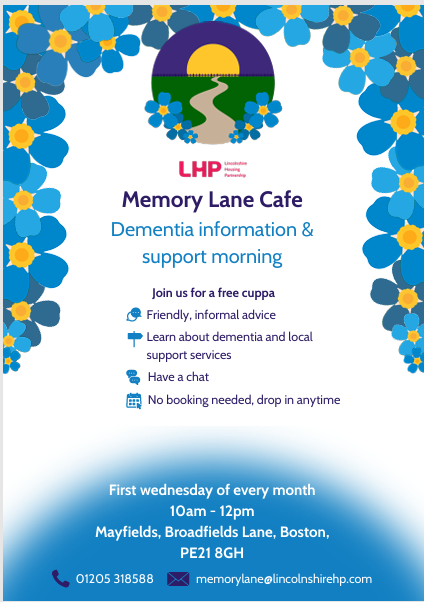
Memory Lane Cafe
-
Music is Magic
Music is magic.
At Memory Lane, we sing…a lot. Some of us can’t sing but we do anyway! Is music just a nice to have? Absolutely not.
Music is stored in several areas of the brain, including the emotional centres that dementia tends to damage last. Research has identified that musical memories are laid down most deeply between the ages of 15 and 25.
Engaging with music, through listening, playing, or structured therapy can lower dementia risk, enhance cognitive function, and improve quality of life for people living with dementia. For individuals living with dementia, music can activate preserved brain networks, supporting memory, emotion, and social connection, even as other cognitive abilities decline.
Music engages auditory, motor, emotional, and memory networks simultaneously, creating opportunities for neuroplasticity and cognitive stimulation. Even in advanced dementia, music can trigger recall of long-term memories, support self-expression, and provide meaningful social interaction.
Music is a powerful, non-pharmacological tool for both preventing cognitive decline and supporting individuals living with dementia. Its benefits extend beyond symptom management, by fostering memory, emotional well-being, social connection, and a sense of identity.
So, we will continue to raise the roof at Mayfields, in our unique ‘Cant’s sing; Will sing’ style and hope our visitors and our clients go away with their spirits lifted.
-
Memory Lane Activities
Activities at Memory Lane
Activities don’t prevent loneliness – connection and building relationships does.
Activities do matter. Entertainment matters. Meaningful occupation matters. But relationships matter more. People living with dementia often forget what they’ve done and who with but can still remember how it made them feel.
A five minute meaningful conversation.
Someone holding their hand.
Looking through old photographs together.
Active listening, to understand, not to reply.
All simple interactions but connection is the key.
We sometimes underestimate how important genuine human relationships are. Compassion costs nothing, yet changes everything.
At Memory Lane we spend time making those relationships strong. Ensuring people know that they matter; that we're listening.
-
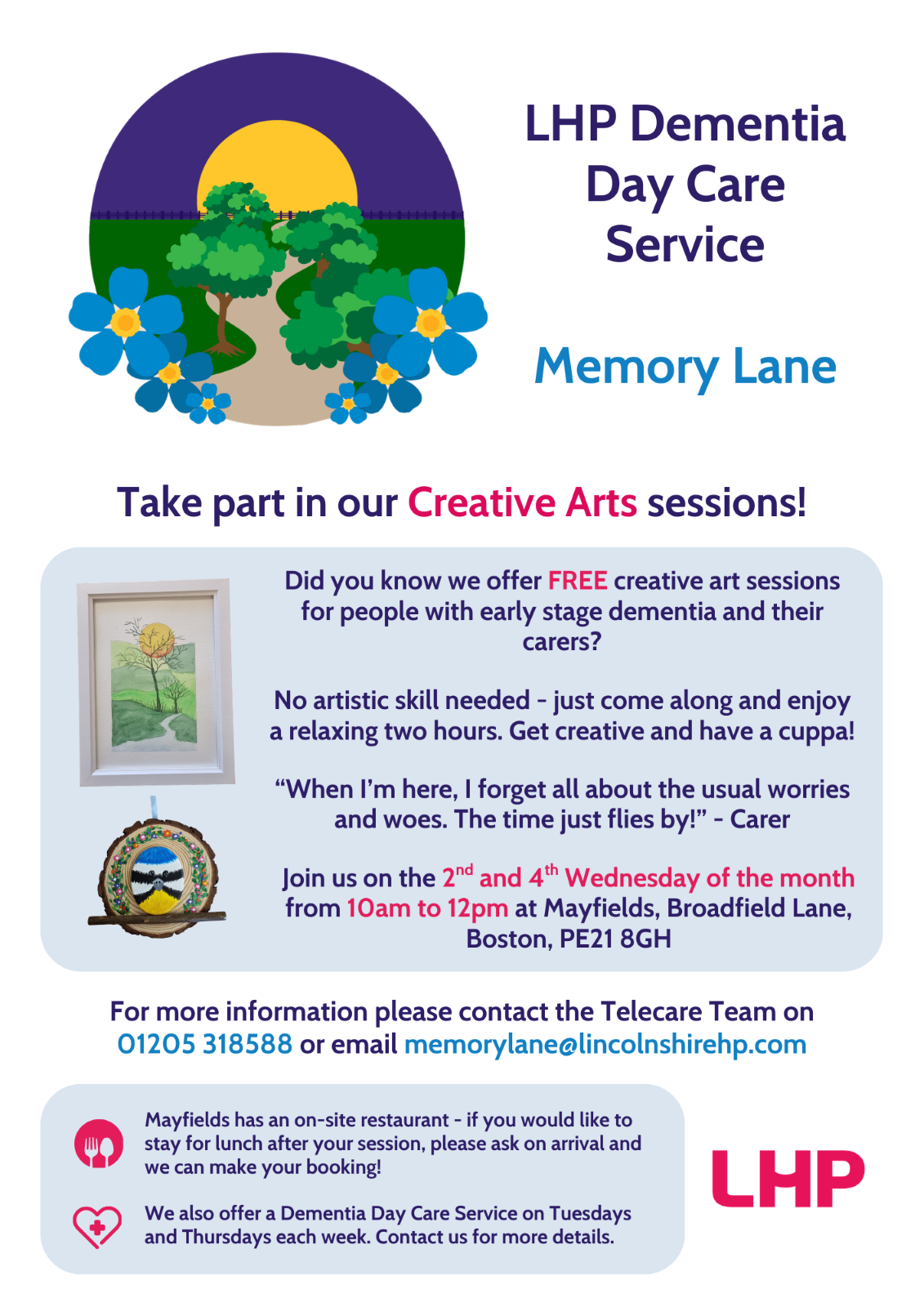
Creative Arts
Thank you for your contribution!
Help us reach out to more people in the community
Share this with family and friends
No thanks

-
DB
Phone 07903049825 Email Deborah.Broadley@lincolnshirehp.com

-
06 August 2026